
Tuesday, July 17, 2007

Sunday, July 01, 2007
Rome take a tour.
A new and very good site, take a tour around ancient Rome, a simulation that is very good,.
for a tour, follow directions and you wont be disappointed. Click here.
for a tour, follow directions and you wont be disappointed. Click here.
Wednesday, June 20, 2007
Resitivty/and survey photo hosting.
Brand new link, will go on side bar soon, meanwhile have a look,click here.
Saturday, May 12, 2007
Sunday, April 29, 2007
Saturday 28th April.
Demonstrations of prehistoric flint Knapping techniques was given by Will Lord,
Professional flint Knapper from Norfolk.
See photo blog for some pictures.http://was-photos.blogspot.com.
Professional flint Knapper from Norfolk.
See photo blog for some pictures.http://was-photos.blogspot.com.
Friday, April 20, 2007
Saw pit Estate Yard
The saw pit in the estate yard at Slindon will be excavated later this year, see notes about the saw pit on, Journal page,click here X.
Monday, April 09, 2007
Photo store. Slindon./Saddlescoombe visit.
Photos taken on the estate over the years are being hosted on a new site, more will be added from time to time. Plus now added Saddlescoombe Farm visit, more to add later. Click on link.http://picasaweb.google.co.uk/archresearch
Monday, November 20, 2006
Sunday, August 20, 2006
20th August.2006. Update.
The walk to Park Brow is now full .click this link.
.Next Saturday there is the start of the two week excavation of a Roman site at Binsted, location available to members only.
There have been some finds from the site recovered on brief field walks; finds include Samiam ware, Course ware, and floor and roof tiles, together with some interesting worked flints.
If you are coming along to this excavation for any period of time, then if you have not already done so, please let Keith Bolton know a.s.p.
The newsletter as you are aware has been delayed for technical reasons, but it is hoped that it will be completed and published very soon.
Meanwhile information about forth coming activities will be posted here.
Society Social will this year be held at the Old Bishops Palace in Tarring West Worthing, date 19th November 7.30pm, cost £7.50 per ticket to include a guest speaker and a ploughman’s supper, together with wine and soft drinks tea and coffee. A great chance to get together with members old and new, all new members who have as yet been along to an event, you will be made most welcome.
Tickets on sale NOW.
.Next Saturday there is the start of the two week excavation of a Roman site at Binsted, location available to members only.
There have been some finds from the site recovered on brief field walks; finds include Samiam ware, Course ware, and floor and roof tiles, together with some interesting worked flints.
If you are coming along to this excavation for any period of time, then if you have not already done so, please let Keith Bolton know a.s.p.
The newsletter as you are aware has been delayed for technical reasons, but it is hoped that it will be completed and published very soon.
Meanwhile information about forth coming activities will be posted here.
Society Social will this year be held at the Old Bishops Palace in Tarring West Worthing, date 19th November 7.30pm, cost £7.50 per ticket to include a guest speaker and a ploughman’s supper, together with wine and soft drinks tea and coffee. A great chance to get together with members old and new, all new members who have as yet been along to an event, you will be made most welcome.
Tickets on sale NOW.
Tuesday, June 13, 2006
Park Brow Walk. Tuesday 29th August 2006
Park Brow. Click to link. Need Acrobat reader.
Site visit organised by Sompting Estate with Lancing & Sompting Pastfinders Click to link.
All welcome, free. Downs NE of Cissbury, settled up to the 4th century AD.
Guided by David McOmish of English Heritage.
(1Refresh awareness of the 'story' of this site
(2) If possible stimulate some original writing reviewing the Park Brow data in the context of more recent studies elsewhere.
(3) Generate ideas for future practical archaeological studies in the Sompting Estate downland, possibly by WAS?
(4) Identify archaeological priorities for future agricultural management of the area, to be considered alongside wildlife and farming ones.
Meet at 18.15 at TQ 166 088, on the east side of Bostal Road, between Beggars Bush CP and Steyning Bowl.
(Parking by kind permission of the Passmore family at Church Farm Coombes.)
We will set off at 18.30 and walk into the Park Brow area using the footpath
off Bostal Road (TQ 163 096) down to Lychpole Bottom
If any members would like to come along, then please let me know in advance.
Numbers are limited,first come basis.
Site visit organised by Sompting Estate with Lancing & Sompting Pastfinders Click to link.
All welcome, free. Downs NE of Cissbury, settled up to the 4th century AD.
Guided by David McOmish of English Heritage.
(1Refresh awareness of the 'story' of this site
(2) If possible stimulate some original writing reviewing the Park Brow data in the context of more recent studies elsewhere.
(3) Generate ideas for future practical archaeological studies in the Sompting Estate downland, possibly by WAS?
(4) Identify archaeological priorities for future agricultural management of the area, to be considered alongside wildlife and farming ones.
Meet at 18.15 at TQ 166 088, on the east side of Bostal Road, between Beggars Bush CP and Steyning Bowl.
(Parking by kind permission of the Passmore family at Church Farm Coombes.)
We will set off at 18.30 and walk into the Park Brow area using the footpath
off Bostal Road (TQ 163 096) down to Lychpole Bottom
If any members would like to come along, then please let me know in advance.
Numbers are limited,first come basis.
Wednesday, June 07, 2006
Summer Solstice.
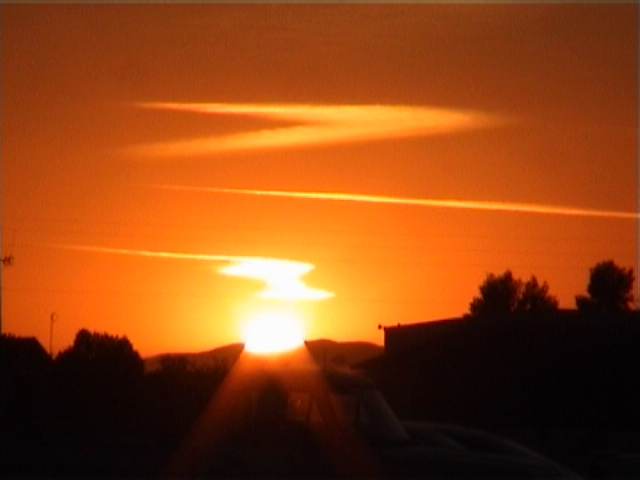
Celebrate the Summer Solstice with other members of the Field Unit on Bignor Hill.
Date 21st June Wednesday.
Time 8pm -10pm. Meet car park top of Bignor Hill, bring a drink and some food, short walk to the site.
We go even if wet!!.
If you would like to come, and not sure how to get there, then please contact Rodney or Keith by email or by phone.
Celebrate the Summer Solstice with other members of the Field Unit on Bignor Hill.
Date 21st June Wednesday.
Time 8pm -10pm. Meet car park top of Bignor Hill, bring a drink and some food, short walk to the site.
We go even if wet!!.
If you would like to come, and not sure how to get there, then please contact Rodney or Keith by email or by phone.
Binsted Now cancelled, but only because the crop will not be off untill October, when we may undertake an excavation.
Summer excavation. Binsted
There will be a continuation of the excavation of the Binsted tile kiln click link.
start date is 26th August till the 10th of September.
If you want to take part over the period of the excavation, will you please let Keith Bolton know by the middle of August the dates’ you hope to attend?
Members site visit.
http://eon-archaeology.blogspot.com
Summer excavation. Binsted
There will be a continuation of the excavation of the Binsted tile kiln click link.
start date is 26th August till the 10th of September.
If you want to take part over the period of the excavation, will you please let Keith Bolton know by the middle of August the dates’ you hope to attend?
Members site visit.
http://eon-archaeology.blogspot.com
Monday, June 05, 2006
North Stoke Church
North Stoke Church. St. Mary’s.
On Saturday the Society resitivity team undertook a resitivity survey around the outside of North Stoke church, the survey was on behalf of the University of Sussex CCE course on church archaeology recording.
A survey of the church is also being undertaken by the Society using our new total station surveying equipment. This will be carrying on over the next few days.
The results of the resitivity survey will be published in the next week or two, but early indications do not show any footprint of a much earlier church on this site.
An early buttress that had been removed at an early date did however show up, another interesting bit of information is that during research into the history of the church among very early documents ‘is that the original dedication of the church has been discovered, St.Marys.
I am sure more about the history of this church will be revealed over the next few weeks by the student’s on this course.
There are some pictures and a little about the history of this church on churches in Sussex web site. just click highlighted link.
On Saturday the Society resitivity team undertook a resitivity survey around the outside of North Stoke church, the survey was on behalf of the University of Sussex CCE course on church archaeology recording.
A survey of the church is also being undertaken by the Society using our new total station surveying equipment. This will be carrying on over the next few days.
The results of the resitivity survey will be published in the next week or two, but early indications do not show any footprint of a much earlier church on this site.
An early buttress that had been removed at an early date did however show up, another interesting bit of information is that during research into the history of the church among very early documents ‘is that the original dedication of the church has been discovered, St.Marys.
I am sure more about the history of this church will be revealed over the next few weeks by the student’s on this course.
There are some pictures and a little about the history of this church on churches in Sussex web site. just click highlighted link.
Wednesday, May 10, 2006

The British Engineerium (Hove)
This most important museum and its collection has been saved , and will reopen, The new owner, Mr Holland, , bought the £2 million British Engineerium building and its unrivalled collection of steam engines and engineering artefacts, valued by Bonhams at about £1.2 million.
Mr Holland plans to spend £500,000 on revamping the musuem, which will then open up to the public as usual.
Monday, May 08, 2006
National Ice Age Network.
National Ice age Network.
The national Ice Network is universities based research group, and seeks the participation of all who are interested in exploring our Ice Age heritage. This includes those in the quarry industry as well as academics and the general public.
Much of our knowledge about the Ice age Britain has arisen from commercial sand and gravel quarrying.
Quarry excavations have revealed geological sequences, plant and animal fossil remains, and the stone tools of out earliest ancestors-the raw materials needed to reconstruct the Ice Age World.
The benefits of the aggregates quarrying to reconstruction our Ice Age heritage cannot be realised unless these finds are recorded, recovered and researched.
Such work is an essential component of environmentally sustainable quarrying, and for this reason the National Ice Age Network is supported by the Aggregates Levy Sustainability Fund (ALSF)
This initiative aims not only to help ensure, through collaboration with the aggregates industry, the recording of Ice Age remains and finds but also to promote interest in a period that shaped the English Landscape.
Ice Age Facts
600,000 years ago early humans were hunting and butchering large animals in Suffolk.
450,000 years ago during the Anglian glaciation, an ice sheet 1km high reached the outskirts of London.
125,000 years ago hippos, lions and elephants would have been a common sight in Central London.
80,000 years ago the Earth entered into the most recent glacial period known in Britain as the Devensian.
20,000 years ago the Devensian reached its peak with an ice sheet covering much of Scotland and England as far south as Birmingham.
11,500 years ago the last glacial period ended and the interglacial we are living in today began
To find out more about our Ice Age heritage, become a member of the National Ice Age Network, log onto www.iceage.org.uk
The national Ice Network is universities based research group, and seeks the participation of all who are interested in exploring our Ice Age heritage. This includes those in the quarry industry as well as academics and the general public.
Much of our knowledge about the Ice age Britain has arisen from commercial sand and gravel quarrying.
Quarry excavations have revealed geological sequences, plant and animal fossil remains, and the stone tools of out earliest ancestors-the raw materials needed to reconstruct the Ice Age World.
The benefits of the aggregates quarrying to reconstruction our Ice Age heritage cannot be realised unless these finds are recorded, recovered and researched.
Such work is an essential component of environmentally sustainable quarrying, and for this reason the National Ice Age Network is supported by the Aggregates Levy Sustainability Fund (ALSF)
This initiative aims not only to help ensure, through collaboration with the aggregates industry, the recording of Ice Age remains and finds but also to promote interest in a period that shaped the English Landscape.
Ice Age Facts
600,000 years ago early humans were hunting and butchering large animals in Suffolk.
450,000 years ago during the Anglian glaciation, an ice sheet 1km high reached the outskirts of London.
125,000 years ago hippos, lions and elephants would have been a common sight in Central London.
80,000 years ago the Earth entered into the most recent glacial period known in Britain as the Devensian.
20,000 years ago the Devensian reached its peak with an ice sheet covering much of Scotland and England as far south as Birmingham.
11,500 years ago the last glacial period ended and the interglacial we are living in today began
To find out more about our Ice Age heritage, become a member of the National Ice Age Network, log onto www.iceage.org.uk
Sunday, May 07, 2006
Field unit, update.
On Saturday the 6th May members of the field unit enjoyed a walk around the Slindon Estate, the purpose of the walk was to introduce new and old members to areas of the Estate that are not normally visited as a part of our field days there.
There was a good attendance despite intermittent rain, which did not dampen sprits; the walk covered a distance of some 7 to 8 miles.
Buildings Archaeology.
While some members were on the walk, others were engaged in the recording of the Victorian/Edwardian conservatory which is a part of the Slindon House complex, and a part of our on going recording work on the standing buildings on the Estate.
The grandeur of the conservatory has long been lost, once the grand glasshouse would have been a home to oranges and peach trees, and many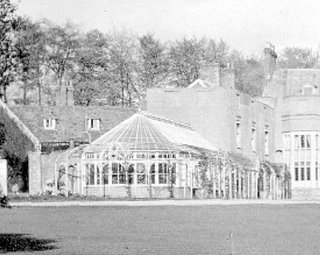 other exotic plants, and a place to take afternoon tea.
The photo taken in 1908 shows that it was very grand, a lost era.
There was a good attendance despite intermittent rain, which did not dampen sprits; the walk covered a distance of some 7 to 8 miles.
Buildings Archaeology.
While some members were on the walk, others were engaged in the recording of the Victorian/Edwardian conservatory which is a part of the Slindon House complex, and a part of our on going recording work on the standing buildings on the Estate.
The grandeur of the conservatory has long been lost, once the grand glasshouse would have been a home to oranges and peach trees, and many
 other exotic plants, and a place to take afternoon tea.
The photo taken in 1908 shows that it was very grand, a lost era.
Thursday, April 27, 2006
Field Work
Summer Excavations.
The Society Field unit is running 2 major excavations this summer.
The dates are:
1.Gobblestubbs Copse. Start. July 8th. Saturday. For one week. This is with English heritage. Confirmation of this date, still to be fully confirmed,
2. Binsted Tile Kiln. Start. 26th August. For two weeks.
This is a continuation of last year’s excavation.
The Society Field unit is running 2 major excavations this summer.
The dates are:
1.Gobblestubbs Copse. Start. July 8th. Saturday. For one week. This is with English heritage. Confirmation of this date, still to be fully confirmed,
2. Binsted Tile Kiln. Start. 26th August. For two weeks.
This is a continuation of last year’s excavation.
Wednesday, April 12, 2006
Recording of buildings
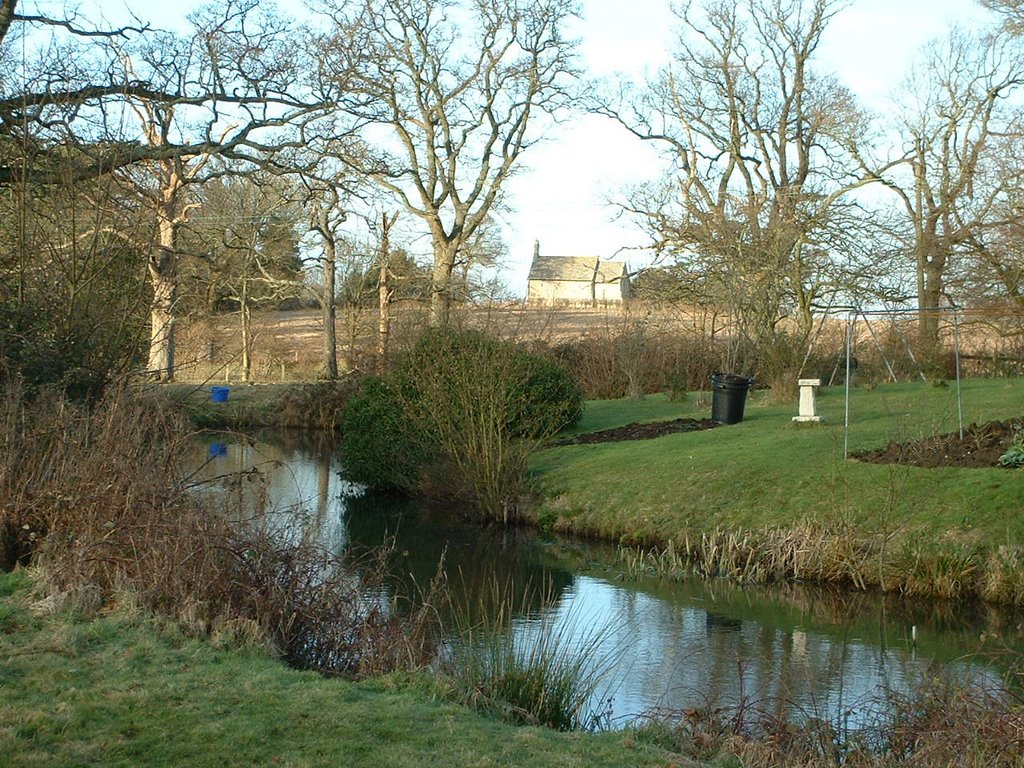
Mike standing. Recording of buildings.
Picture, Moated site near Buncton Chapel. (Click on picture to enlarge.)
On Tuesday night Mike Standing gave the Society a very interesting lecture on the Archaeology of Buildings, and some thought provoking fields of investigations were discussed.
Such diverse areas of investigation that has yet to be undertaken, is the recording of moated sites in the Arun valley, and I suspect that applies also to the Adur valley and other areas, perhaps a future project for some members of our Society.
Other areas of recording that I must admit I had not thought of is the recording of certain farm buildings, not the barns, but the smaller structures, such as pig stys,
workshops and alike, and the outside privy, none of the buildings have really been recorded in any depth, and they are disappearing fast.
Are there any members out there that may like to undertake one of the areas of recording, it would be a very good project to undertake, it could be in the first instance a photographic recording, and can be over a long period of time, but not to long as the features are disappearing.
Sunday, April 09, 2006
Saturday 6th May.
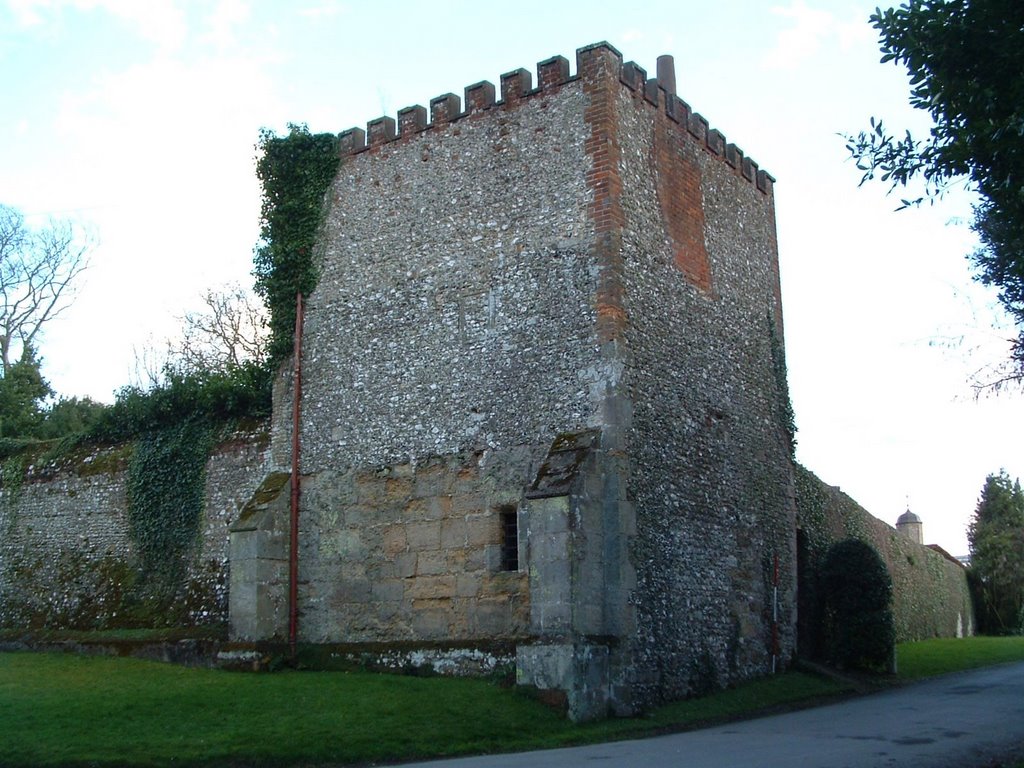
Slindon Walk. Saturday 6th May, time 9.45 am. Meet at the National Trust Estate Base camp, this is next to the entrance to Slindon College.
All new members, and those who may wish to join us.
Picture of Medieval tower on estate.
For those of you who belong to the Field Unit but have never or rarely visited the estate, we will be having a walk around the southern and middle sections of the NT estate on Saturday 6th May.
The intention is to look at the medieval deer park and the archaeological sites within it, in the morning. After lunch (bring your own), we will walk the central part of the estate, looking at various archaeological sites.
If people only want to do the morning walk - that will be fine.
Meet at the Slindon NT office/Base Camp at 9:45 for a 10:00 start. For those not interested in the walk, there will be other activities.... info to follow.
If you don’t know the way to Slindon, please let me know and I will provide details.Email to :
rodney_gunner@hotmail.com
Monday, April 03, 2006
Update.
Warminghurst.
The University of Sussex M.A. training excavation is over, there were not a lot of fines, one or two sherds of late medieval pottery, but otherwise mainly some of the geology of the area was exposed, in the main sandstone.
But the students learned a lot about recording techniques, which was the aim of the excavation. Sally Montstephen was our member on this excavation.
Goodwood.
Another M.A. training excavation is being undertaken at a location near to Goodwood, this involves one of our members Pat Jones, at the time of writing I do not have any details of the excavation, except to say that I understand that it is very impressive.
Warminghurst.
Another area close by the church, produced on a very short field overservation walk, sherds of early course medieval pottery, this is close to the location of possible area of early medieval occupation, a field walk may be planned for this area later this year.
Binsted
Work is continuing on researching the area, and extracting information from files at Worthing museum about the 1960s excavation of the tile kiln there, which was undertaken by the late Con Ainsworth.
Much valuable information has come to light and in due course it is hoped that a report will be produced.
Emma Tristram, is also researching the area, and is doing a lot of very valuable field research work, and is discovering a lot of lost information about the area, and its inhabitants over the periods of time. See http://binsted-discoveries.blogspot.com
The University of Sussex M.A. training excavation is over, there were not a lot of fines, one or two sherds of late medieval pottery, but otherwise mainly some of the geology of the area was exposed, in the main sandstone.
But the students learned a lot about recording techniques, which was the aim of the excavation. Sally Montstephen was our member on this excavation.
Goodwood.
Another M.A. training excavation is being undertaken at a location near to Goodwood, this involves one of our members Pat Jones, at the time of writing I do not have any details of the excavation, except to say that I understand that it is very impressive.
Warminghurst.
Another area close by the church, produced on a very short field overservation walk, sherds of early course medieval pottery, this is close to the location of possible area of early medieval occupation, a field walk may be planned for this area later this year.
Binsted
Work is continuing on researching the area, and extracting information from files at Worthing museum about the 1960s excavation of the tile kiln there, which was undertaken by the late Con Ainsworth.
Much valuable information has come to light and in due course it is hoped that a report will be produced.
Emma Tristram, is also researching the area, and is doing a lot of very valuable field research work, and is discovering a lot of lost information about the area, and its inhabitants over the periods of time. See http://binsted-discoveries.blogspot.com
Subscribe to:
Posts (Atom)