Wednesday, May 10, 2006


The British Engineerium (Hove)

This most important museum and its collection has been saved , and will reopen, The new owner, Mr Holland, , bought the £2 million British Engineerium building and its unrivalled collection of steam engines and engineering artefacts, valued by Bonhams at about £1.2 million.
Mr Holland plans to spend £500,000 on revamping the musuem, which will then open up to the public as usual.

Monday, May 08, 2006

National Ice Age Network.

National Ice age Network.

The national Ice Network is universities based research group, and seeks the participation of all who are interested in exploring our Ice Age heritage. This includes those in the quarry industry as well as academics and the general public.
Much of our knowledge about the Ice age Britain has arisen from commercial sand and gravel quarrying.
Quarry excavations have revealed geological sequences, plant and animal fossil remains, and the stone tools of out earliest ancestors-the raw materials needed to reconstruct the Ice Age World.

The benefits of the aggregates quarrying to reconstruction our Ice Age heritage cannot be realised unless these finds are recorded, recovered and researched.
Such work is an essential component of environmentally sustainable quarrying, and for this reason the National Ice Age Network is supported by the Aggregates Levy Sustainability Fund (ALSF)

This initiative aims not only to help ensure, through collaboration with the aggregates industry, the recording of Ice Age remains and finds but also to promote interest in a period that shaped the English Landscape.
Ice Age Facts

600,000 years ago early humans were hunting and butchering large animals in Suffolk.

450,000 years ago during the Anglian glaciation, an ice sheet 1km high reached the outskirts of London.

125,000 years ago hippos, lions and elephants would have been a common sight in Central London.

80,000 years ago the Earth entered into the most recent glacial period known in Britain as the Devensian.

20,000 years ago the Devensian reached its peak with an ice sheet covering much of Scotland and England as far south as Birmingham.

11,500 years ago the last glacial period ended and the interglacial we are living in today began

To find out more about our Ice Age heritage, become a member of the National Ice Age Network, log onto www.iceage.org.uk

Sunday, May 07, 2006

Field unit, update.

On Saturday the 6th May members of the field unit enjoyed a walk around the Slindon Estate, the purpose of the walk was to introduce new and old members to areas of the Estate that are not normally visited as a part of our field days there.
There was a good attendance despite intermittent rain, which did not dampen sprits; the walk covered a distance of some 7 to 8 miles.

Buildings Archaeology.

While some members were on the walk, others were engaged in the recording of the Victorian/Edwardian conservatory which is a part of the Slindon House complex, and a part of our on going recording work on the standing buildings on the Estate.
The grandeur of the conservatory has long been lost, once the grand glasshouse would have been a home to oranges and peach trees, and many other exotic plants, and a place to take afternoon tea.
The photo taken in 1908 shows that it was very grand, a lost era.

Thursday, April 27, 2006

Field Work

Summer Excavations.

The Society Field unit is running 2 major excavations this summer.
The dates are:

1.Gobblestubbs Copse. Start. July 8th. Saturday. For one week. This is with English heritage. Confirmation of this date, still to be fully confirmed,

2. Binsted Tile Kiln. Start. 26th August. For two weeks.

This is a continuation of last year’s excavation.

Wednesday, April 12, 2006

Recording of buildings


Mike standing. Recording of buildings.

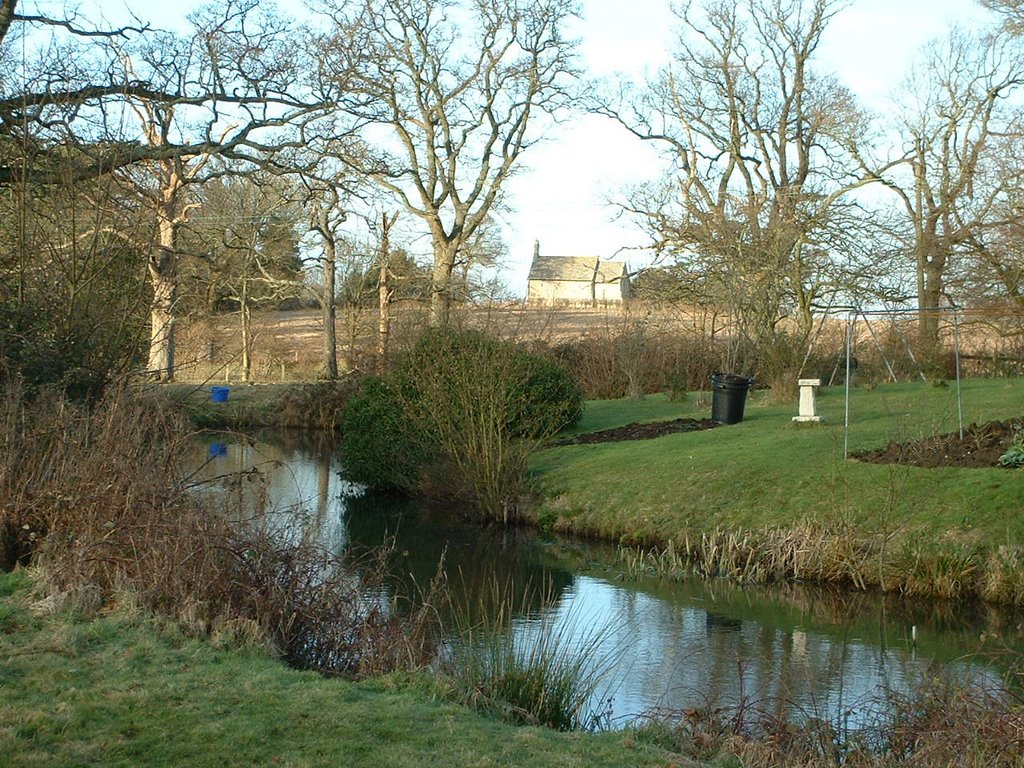
Picture, Moated site near Buncton Chapel. (Click on picture to enlarge.)

On Tuesday night Mike Standing gave the Society a very interesting lecture on the Archaeology of Buildings, and some thought provoking fields of investigations were discussed.
Such diverse areas of investigation that has yet to be undertaken, is the recording of moated sites in the Arun valley, and I suspect that applies also to the Adur valley and other areas, perhaps a future project for some members of our Society.

Other areas of recording that I must admit I had not thought of is the recording of certain farm buildings, not the barns, but the smaller structures, such as pig stys,
workshops and alike, and the outside privy, none of the buildings have really been recorded in any depth, and they are disappearing fast.

Are there any members out there that may like to undertake one of the areas of recording, it would be a very good project to undertake, it could be in the first instance a photographic recording, and can be over a long period of time, but not to long as the features are disappearing.

Sunday, April 09, 2006

Saturday 6th May.


Slindon Walk. Saturday 6th May, time 9.45 am. Meet at the National Trust Estate Base camp, this is next to the entrance to Slindon College.

All new members, and those who may wish to join us.
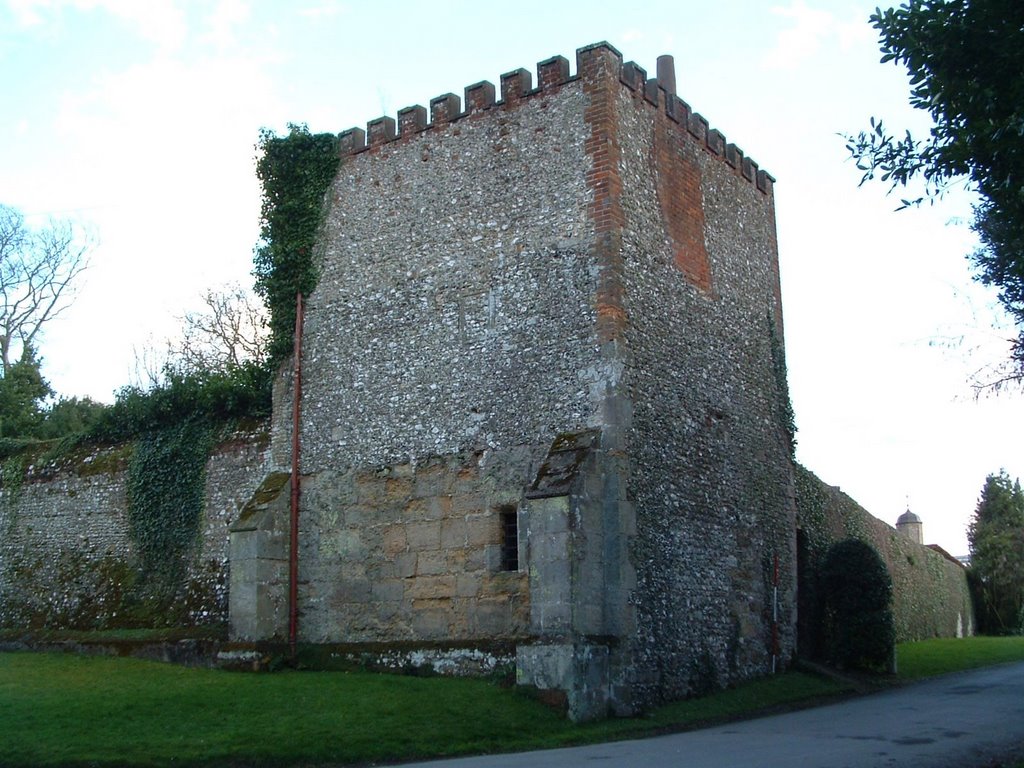
Picture of Medieval tower on estate.

For those of you who belong to the Field Unit but have never or rarely visited the estate, we will be having a walk around the southern and middle sections of the NT estate on Saturday 6th May.


The intention is to look at the medieval deer park and the archaeological sites within it, in the morning. After lunch (bring your own), we will walk the central part of the estate, looking at various archaeological sites.

If people only want to do the morning walk - that will be fine.

Meet at the Slindon NT office/Base Camp at 9:45 for a 10:00 start. For those not interested in the walk, there will be other activities.... info to follow.

If you don’t know the way to Slindon, please let me know and I will provide details.Email to :
rodney_gunner@hotmail.com

Monday, April 03, 2006

Update.

Warminghurst.

The University of Sussex M.A. training excavation is over, there were not a lot of fines, one or two sherds of late medieval pottery, but otherwise mainly some of the geology of the area was exposed, in the main sandstone.
But the students learned a lot about recording techniques, which was the aim of the excavation. Sally Montstephen was our member on this excavation.

Goodwood.

Another M.A. training excavation is being undertaken at a location near to Goodwood, this involves one of our members Pat Jones, at the time of writing I do not have any details of the excavation, except to say that I understand that it is very impressive.

Warminghurst.

Another area close by the church, produced on a very short field overservation walk, sherds of early course medieval pottery, this is close to the location of possible area of early medieval occupation, a field walk may be planned for this area later this year.

Binsted

Work is continuing on researching the area, and extracting information from files at Worthing museum about the 1960s excavation of the tile kiln there, which was undertaken by the late Con Ainsworth.
Much valuable information has come to light and in due course it is hoped that a report will be produced.
Emma Tristram, is also researching the area, and is doing a lot of very valuable field research work, and is discovering a lot of lost information about the area, and its inhabitants over the periods of time. See http://binsted-discoveries.blogspot.com

Sunday, March 26, 2006

Open day.

Worthing Museum open day.

The day proved very successful, in that we recruited some six new members, the number of visitors over other days we have attended there was also up.
There is a varied selection of field work coming up over the Spring and Summer period, so look out for your emails and look at this site every week for updates.

WARMINGHURST
Work at Warminghurst is carrying on for another week, so far, the finds include some very fine late medieval pottery, but there is so far no indication as to its providence.
The Sussex County Times newspaper carried out an interview with myself, about the area and in particular the church and its history, they took some pictures of the excavation there.
This article should be published in a week or two.Visitors are welcome to visit the site, please contact me direct for directions. arch.research@ntlworld.com

Sunday, March 19, 2006

Time team


Time Team, some pics from Time Team.

Friday, March 17, 2006

Update 17th March.

March 15th, work on archiving Con Ainsworth 1960s excavation at Binsted, continues at Worthing museum, together with the archiving of maps stored there.
This is an on going process; that will continual for some time.
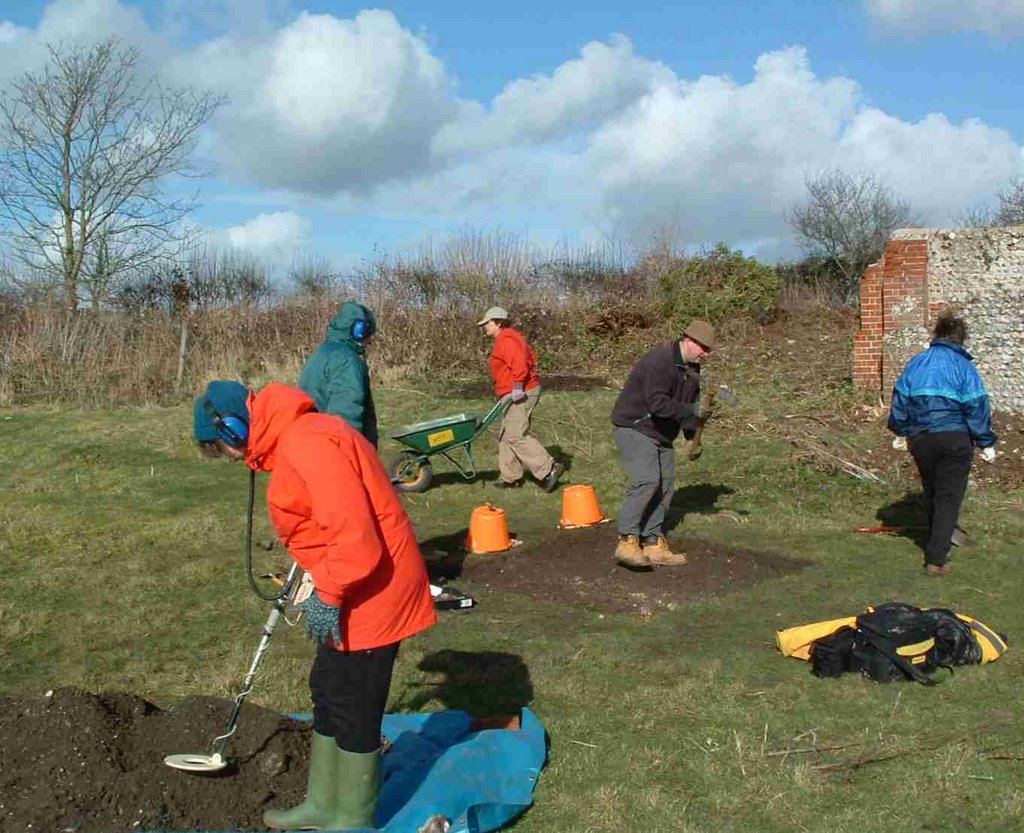
March 16th Thursday, members of the field unit were at Slindon, surveying took place on the enclosures at Rewell Wood, despite it being very cold with light snow, the task was completed.
Other members stayed at the base camp in the warm, and undertook finds processing, washing and marking.

Starting this Saturday 18th March, over a two-week period, two of our members who are undertakeing a part time MA course at Sussex University, will be excavating at Warminghurst, and at Goodwood. Sally Mountsteven at Warminghurst, and Pat Jones at Goodwood. Society members are providing assistance.

Tuesday, March 14, 2006

Time Team

Time Team.19th March.

The programe to watch, this Sunday at 5.55pm, Black Patch, and we are in it, well that is if you look very closely.
Pete Skilton will be there !!!.

Saturday, March 11, 2006


Slindon Village, open day.

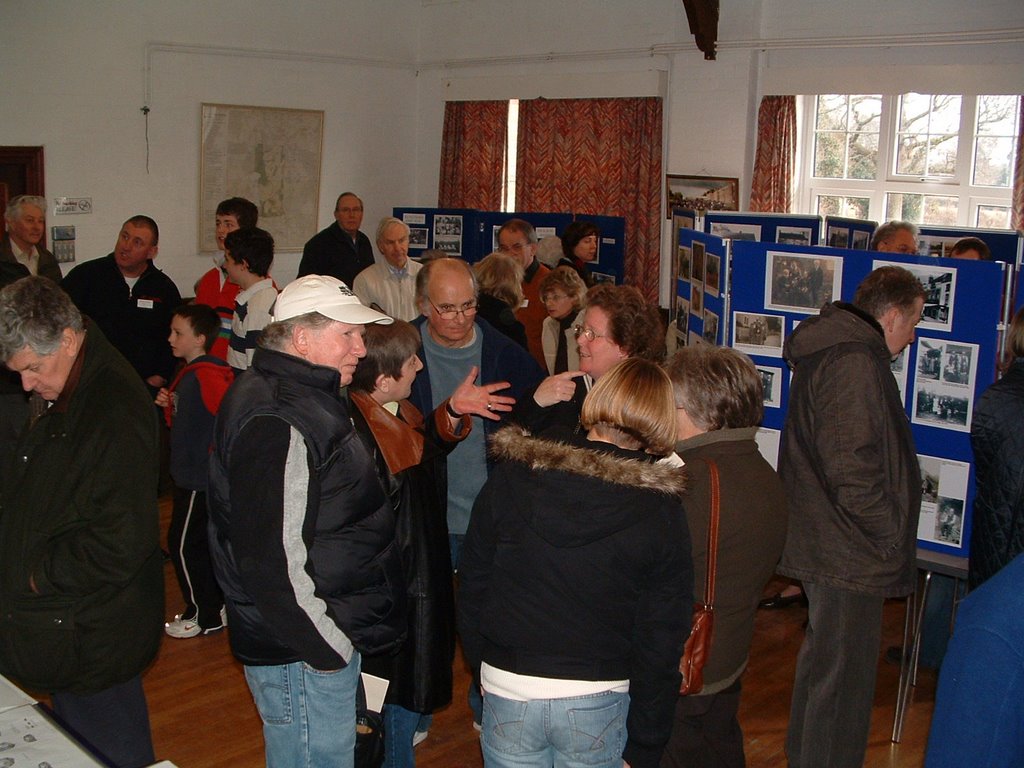
The open day at Slindon village hall was very successful; at times, the hall was so full that it was difficult to move around.
The display of old photos of the village and its various trades and folk, was an excellent display, this is what a history day is all about, and it brought together archaeology and history, each complementing the other.
I would like to thank all those involved and a special thanks to Robin Upton, whose vast collection of photos covering the late nineteenth century up to the present day was very impressive.We must not forget the history club, and all the hard work put in by Philip Berry, and the financial help given by the Pudding Club. Last but not least, the National Trust for their contribution on the day, and their ongoing welfare of the village as a whole.

Wednesday, March 08, 2006

Clear the trees.

Tree stump, remover.

Just a thought, a way to remove trees in the way of excavations, just use a stick or two of dynamite, blow them up.
This was the method used, on an excavation back in the sixties, on a site just West of Arundel.
Seems a good idea to me! Saves a lot of digging.I can see Con Ainsworth there now, “all stand back light the fuse” “BANG”. OPPS!

Monday, March 06, 2006

updates.6th March.

Update 6th march
Patching.
Another successful weekend dig at Patching, the results are still inconclusive, much of the foundations of the house that stood on the site up until the late fifties has been uncovered, but signs of an early house on the site, have mostly evaded our investigations.
There maybe further work on the site at some date in the future.

Rewell Wood area .nr. Arundel.

Some surveying of this area has taken place over the past week, David Mc.Omish of English Heritage commented on the high standard of surveying undertaken by members of the field unit.
More work including some possible excavating will take place over the next few months.

Slindon 11th march.

Slindon village open day at Coronation Hall in Slindon Village.
This is an important day for the society; it is in conjunction with the Slindon History group, and the National Trust.
One of the oldest cottages in the village will be open to visitors before restoration, an opportunity to inspect one of these cottages.
Members of the village community will be bringing to the hall many old pictures and documents of the village and the estate, which will help us understand the working of the estate over the many hundred of years it has been there.
The open day will run from 10.30am until 4.30pm, all members are welcome to come along and see what is on view; there may well be some surprises.
On show will be many finds from the Upton collection, this alone will be of great interest.

Thursday, March 02, 2006

March Update.

Update March 2nd.

Over the weekend of the 4th-5th of March we will be working at Patching, this maybe the last time we visit the site, it is hoped that some of the questions will be answered, about the earlier building that preceded the building that was demolished in the early 60s.

Future work

This spring there will be a resitivity survey of the site of Sele Priory in Upper Beeding, this is a very interesting site with lots of history, see the Sele Priory web site. http://sele-priory.mysite.wanadoo-members.co.uk .
The aim of the survey will be to try to locate the watermill that once stood there, but disappeared some 500 years ago.
The work there is in conjunction with the Beeding history group.

Warminghurst

This month sees the start of some excavations within the area, this is for students of Sussex University who are on their M.A course, the Society is giving assistance where needed.Another interesting site has become known within the area, that of a moated site just north of the church, this is not Wolves farm site. There are details about the area at . http://warminghurst-history.mysite.wanadoo-members.co.uk

Sunday, February 26, 2006

Updates February

26-2-06
Patching update.

The results of the four day excavation is so far inconclusive, most of the material being uncovered is of the late 19th century to mid 20th century, and mostly house foundations and garden features.
There are two more days of excavations; if there is any material from early dates then it may turn up over theses two days. A interim report will be posted here later.

Binsted.

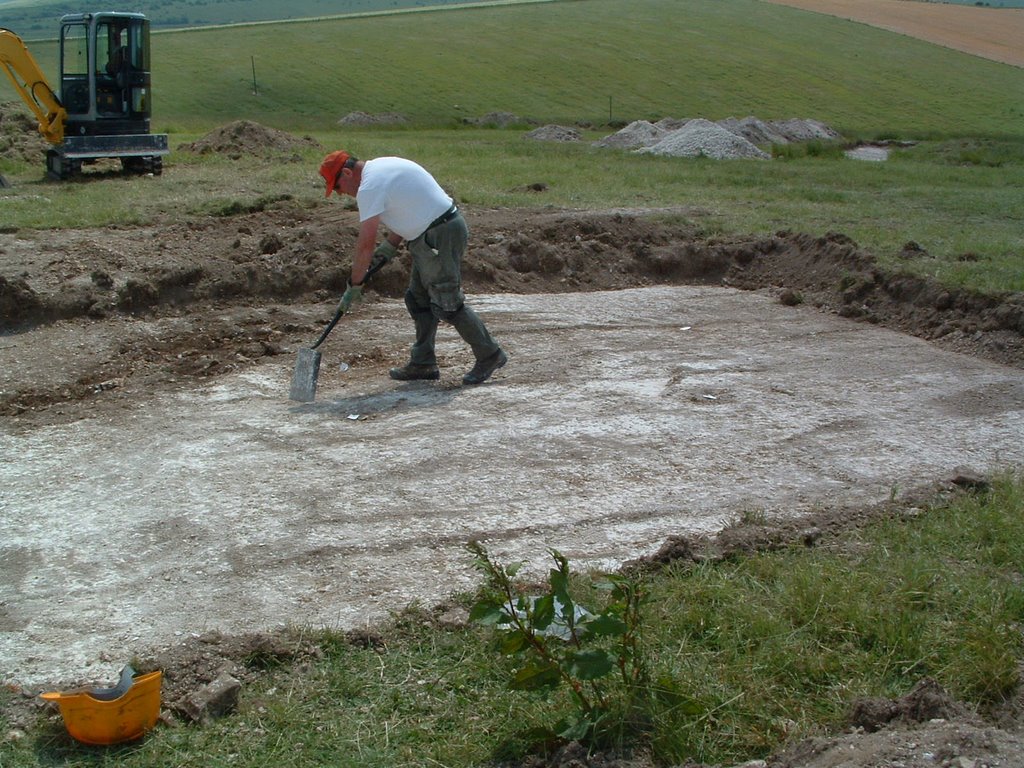
This year further work will be carried out on the kiln site; this will take place in late August for a two-week period.
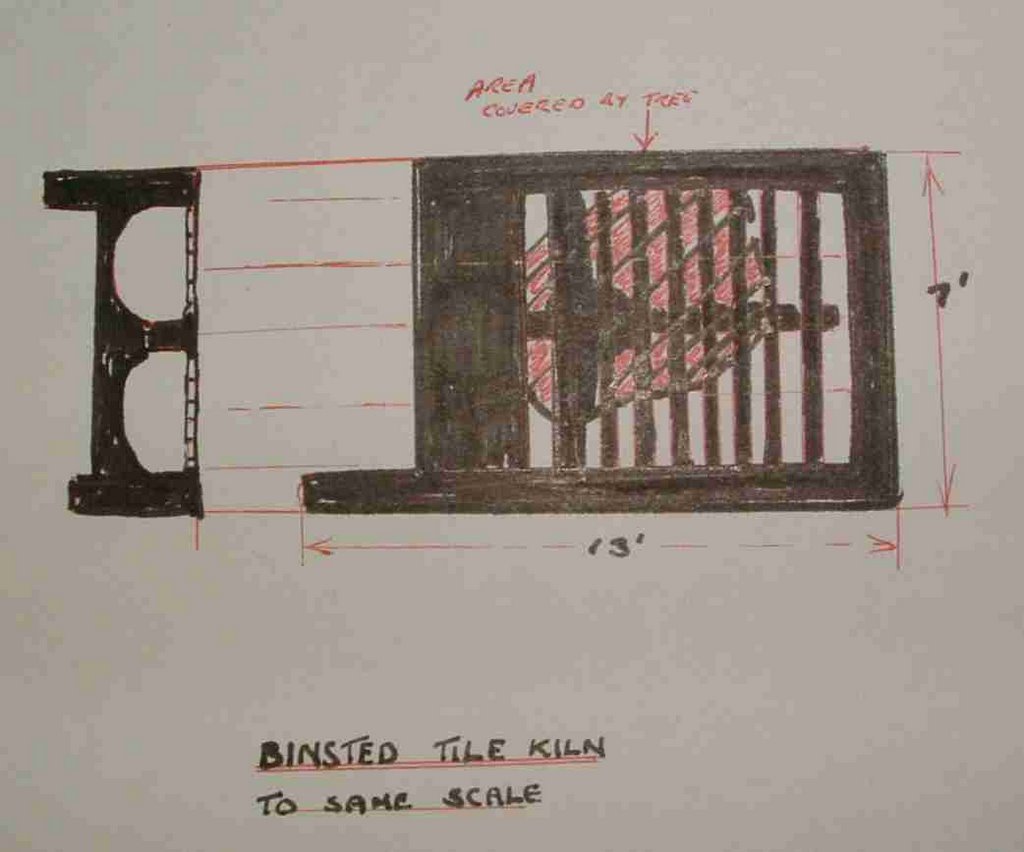
Over the past year, research into the kiln that Con Ainsworth excavated in the 1960s, has been undertaken, and a lot of material has been unearthed.
From this material it may be possible to get the precise location of his kiln site, this is important as it will help us understand our later kiln site.We know it was under the willow tree, and north is shown on drawings, and an Aerial photo when blown up shows the excavation, so some survey work useing this photo will locate its precise location. Research has shown that the Littlehampton Archaeological and History Society now no longer, carried out some work on kiln sites within the area of Binsted, but the information is sketchy, this may well be how Con Ainsworth new about the site that he excavated.
More information is on Binsted web site.

Picture of Binsted kiln 1965-6 artist not known, found in arcives at Worthing museum.

http://binsted.mysite.wanadoo-members.co.uk

Sunday, February 12, 2006

Field Unit.


February 2005. Field Unit update.

Welcome to this site, over the coming weeks more will be added to the content, it is hoped that in the not to distant future that our new main web site will be up and running, this will contain newsletters past and present, as well as site reports and a picture library, and a host of other items.Click Profile to take you to my other sites.

The purpose of this site is to keep you up to date with what is happening within the field unit, and for your feedback.
You need to look at the site each week, but don’t worry you will still receive emails from the field unit as well, so at all times you will be fully be kept informed of what is going on and where
Non - Members.

For non- members who visit this site, you are welcome, and if you are interested in becoming a member of the society and the field unit, then please email for more information. arch.research@ntlworld.com

Patching.

Over the next few weeks the field unit will be undertaking an excavation in Patching village, the site may contain an early medieval building, but over the period of years it has been built over many times, so there will be a lot of unravelling to understand the site.


Patching Hoard.

Patching is now famous for the hoard of gold coins found there a few years ago, the coins which are very impressive are on display in Worthing museum, the Society gave a donation to the museum, towards the cost of the display.
The period of the coins is, Roman to Early Medieval/Dark Age - 43 AD to 1065 AD.

The Church.

The Church of St. John the Divine, Patching, is Early English with some Perpendicular work, but was restored in C19

Horse Engine.

A horse gin is situated in a field E. of Patching churchyard. It is a good example of a widespread type of Victorian
water-raising equipment. The mid-C19 cast-iron gin was worked by a horse walking around a still visible circular path.
This gin worked a three throw pump through a depth of 150 ft.

Roman Corn Drying Kiln.

Roman - 43 AD to 409 AD Near Patching pond.
A corn drying kiln associated with other structures was excavated by Con Ainsworth in 1974. Some photographs were
taken and plans and sections drawn. Finds included a wide range of pottery sherds and a small bronze brooch in the
shape of a fish, all last known to be in the possession of Con Ainsworth..

Con Ainsworth.

This is only a brief list of finds within the area, what is of interest is that Con Ainsworth had done a lot of work in the area, but to date most of the information he collected is missing, so it would be good to locate this most interesting information.